
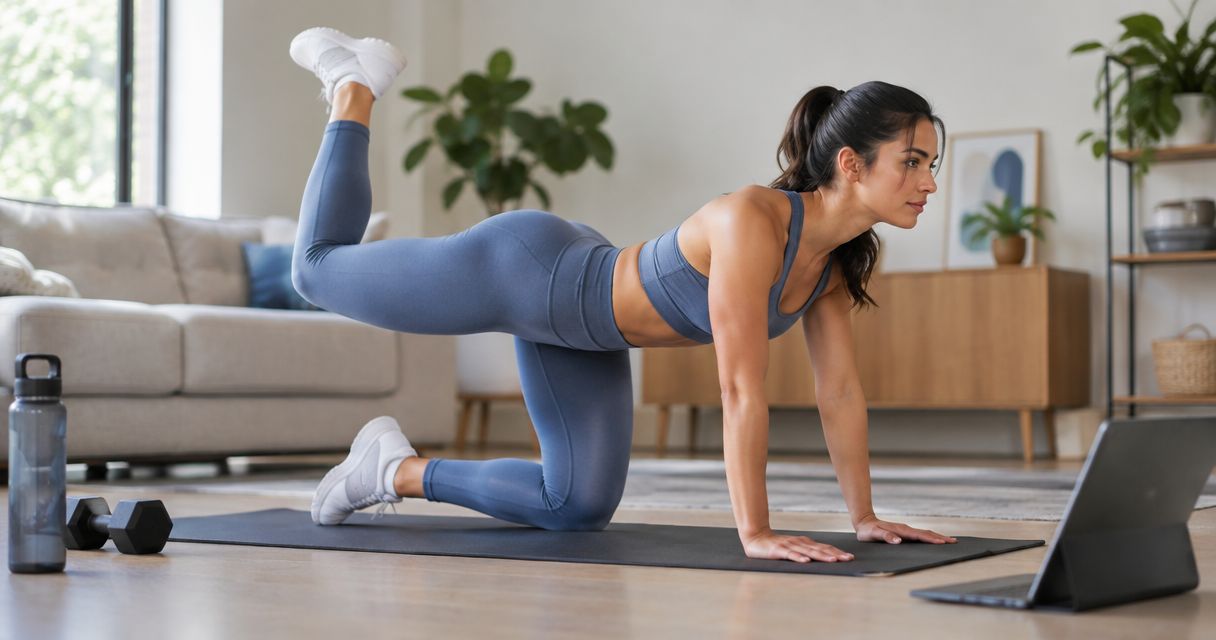
Best overall: the hip thrust. Best for deep single-leg training: the Bulgarian split squat. Best equipment-free option: the glute bridge. These are the best glute exercises for a practical strength-and-growth routine in 2026, with alternatives for different equipment and training needs.
- The hip thrust leads this best glute exercises list for supported, progressively loaded hip extension.
- Pair a hip thrust with a squat, split squat, or Romanian deadlift rather than collecting similar exercises.
- The glute bridge is the simplest equipment-free starting point; its long-term loading options are limited.
- Cerebralphysique combines structured strength-training programs with breathwork and recovery coaching for adults pursuing long-term fitness.
Why this matters
Your glutes extend your hips, help control your thighs, and contribute to pelvic stability. A useful routine trains those functions without making every session an exercise sampler.
Cerebralphysique is best for adults seeking glute exercises within structured strength training and recovery coaching. Explore Cerebralphysique if you want that broader approach. The exercise ranking below separates movement choices from the programming that makes them useful.
What makes the best glute exercises?
Use these criteria to choose your exercises in 2026:
- Progression: You can increase resistance, repetitions, or movement difficulty while maintaining control.
- Range of motion: You can use a repeatable range without forcing your joints into uncomfortable positions.
- Stability: Balance does not end the set before your target muscles work hard.
- Complementary movement: The exercise adds something your other selections lack.
- Practical setup: Your equipment and available space support consistent practice.
The ranking prioritizes these criteria, not a claim that one movement produces the most growth for everyone. In the verdict labels, Buy means choose the exercise, not purchase equipment; Hold means establish the required control first.
Best glute exercises at a glance
| Rank and exercise | Best for | Standout feature | Key limitation |
|---|---|---|---|
| 1. Hip thrust | Supported loaded hip extension | Upper-back support | Bench and load setup |
| 2. Bulgarian split squat | Deep single-leg training | Adjustable stance and depth | Balance demands |
| 3. Romanian deadlift | Learning a loaded hinge | Controlled hip movement | Technique-sensitive |
| 4. Glute bridge | Equipment-free beginners | Simple floor setup | Limited bodyweight progression |
| 5. Reverse lunge | Dynamic unilateral training | Backward stepping pattern | Foot placement demands |
| 6. Step-up | Practicing upward single-leg drive | Adjustable platform height | Trailing-leg assistance |
| 7. Squat | Combined thigh and glute training | Bilateral compound movement | Depth varies by individual |
| 8. Cable kickback | Isolated hip extension | Cable resistance | Easy to substitute back movement |
| 9. Hip abduction machine | Dedicated lateral glute work | Seated support | Does not replace hip extension |
| 10. Kettlebell swing | Explosive hip extension | Repeated ballistic hinge | Requires established hinge technique |
1. Hip thrust: best glute exercise for supported loading
The hip thrust uses upper-back support while you extend your hips against resistance. Finish with your pelvis controlled rather than lifting higher through your lower back.
Hip thrust pros:
- Supports a repeatable setup.
- Allows progressive resistance.
- Requires less standing balance.
Hip thrust cons:
- Bench positioning takes practice.
- Loading across the hips needs comfortable padding.
Best for: Supported loaded hip extension.
Verdict: Buy — choose it as your main supported glute exercise.
2. Bulgarian split squat: best for deep single-leg training
The Bulgarian split squat places your rear foot on a support while your front leg performs most of the work. Use a stable hand support if balance interrupts controlled repetitions.
Bulgarian split squat pros:
- Trains each leg separately.
- Allows adjustable depth.
- Works with several loading options.
Bulgarian split squat cons:
- Balance adds difficulty.
- Rear-foot positioning needs adjustment.
Best for: Deep single-leg training.
Verdict: Buy — use support before adding more resistance.
3. Romanian deadlift: best for learning a loaded hinge
The Romanian deadlift trains hip extension alongside the hamstrings. Push your hips backward with a modest knee bend, keeping the load close; stop where you can maintain your trunk position.
Romanian deadlift pros:
- Trains glutes and hamstrings together.
- Builds hinge practice.
- Allows progressive loading.
Romanian deadlift cons:
- Grip can limit the set.
- Extra depth can become back movement.
Best for: Controlled loaded hinging.
Verdict: Buy — prioritize repeatable technique over reaching the floor.
4. Glute bridge: best for equipment-free beginners
The glute bridge starts with your back on the floor and your feet planted. Raise your hips without arching your back to manufacture a higher finish.
Glute bridge pros:
- Needs no equipment.
- Has a simple setup.
- Provides a stable starting position.
Glute bridge cons:
- Bodyweight resistance eventually limits progression.
- Floor positioning limits movement range.
Best for: Equipment-free beginners.
Verdict: Buy — start here, then progress when controlled repetitions become easy.
5. Reverse lunge: best for dynamic unilateral training
The reverse lunge adds a backward step to single-leg training. Keep the front foot planted and use a step length that lets you lower and return without losing balance.
Reverse lunge pros:
- Trains legs individually.
- Needs little fixed equipment.
- Adds stepping coordination.
Reverse lunge cons:
- Inconsistent steps change the movement.
- Balance can limit loading.
Best for: Dynamic unilateral training.
Verdict: Buy — choose it when stepping control is part of your goal.
6. Step-up: best for upward single-leg drive
The step-up trains you to rise onto a stable platform using the working leg. Choose a height that allows control rather than pushing hard off your trailing foot.
Step-up pros:
- Trains each side separately.
- Allows height adjustment.
- Practices upward force production.
Step-up cons:
- Trailing-leg assistance hides difficulty.
- Excessive height encourages compensations.
Best for: Practicing upward single-leg drive.
Verdict: Buy — control the lowering phase as carefully as the ascent.
7. Squat: best for combined thigh and glute training
The squat trains your thighs and glutes through a bilateral movement. Use a stance and depth you can repeat comfortably; deeper is not better when you lose control.
Squat pros:
- Trains several muscle groups.
- Offers varied loading options.
- Supports measurable progression.
Squat cons:
- Is not glute isolation.
- Comfortable depth differs between people.
Best for: Combined thigh and glute training.
Verdict: Buy — choose it for whole-lower-body training, not glute isolation.
8. Cable kickback: best for isolated hip extension
The cable kickback adds hip extension without another demanding squat or hinge. Hold a stable support and move your thigh backward without twisting your pelvis.
Cable kickback pros:
- Offers adjustable resistance.
- Trains each side separately.
- Fits after compound exercises.
Cable kickback cons:
- Requires cable equipment.
- Back arching can replace hip movement.
Best for: Isolated hip extension.
Verdict: Buy — use it as an accessory, not your entire routine.
9. Hip abduction machine: best for lateral glute work
The hip abduction machine resists moving your thighs apart. It complements hip-extension exercises by adding a different movement rather than repeating another bridge variation.
Hip abduction machine pros:
- Provides seated support.
- Allows adjustable resistance.
- Adds dedicated abduction work.
Hip abduction machine cons:
- Requires a machine.
- Cannot replace loaded hip extension.
Best for: Dedicated lateral glute work.
Verdict: Buy — add it when your routine lacks abduction work.
10. Kettlebell swing: best for explosive hip extension
The kettlebell swing uses a quick hip hinge to propel the bell. It is a power exercise, not a slow kickback substitute; learn the hinge before introducing speed.
Kettlebell swing pros:
- Trains explosive hip extension.
- Uses a compact implement.
- Combines repeated hinges with conditioning.
Kettlebell swing cons:
- Timing requires practice.
- Fatigue can disrupt technique.
Best for: Explosive hip extension.
Verdict: Hold — establish a controlled hinge before adding ballistic repetitions.
How we ranked
This 2026 ranking favors controllable loading, practical setups, and distinct training roles. It is a movement-selection guide, not a head-to-head growth study. An exercise drops in priority when setup, balance, or skill prevents you from training it consistently.
Which glute exercises should you choose?
Choose the hip thrust as your default, then add a Romanian deadlift or Bulgarian split squat. Add hip abduction when you want a separate lateral movement. You do not need every ranked exercise.
For a simple 2026 starting template, schedule 2 sessions per week, with a rest day between them. Choose a supported extension and a hinge or single-leg exercise; begin with 2 sets per exercise and 8–12 repetitions per set. These are starting instructions, not a guaranteed growth formula.
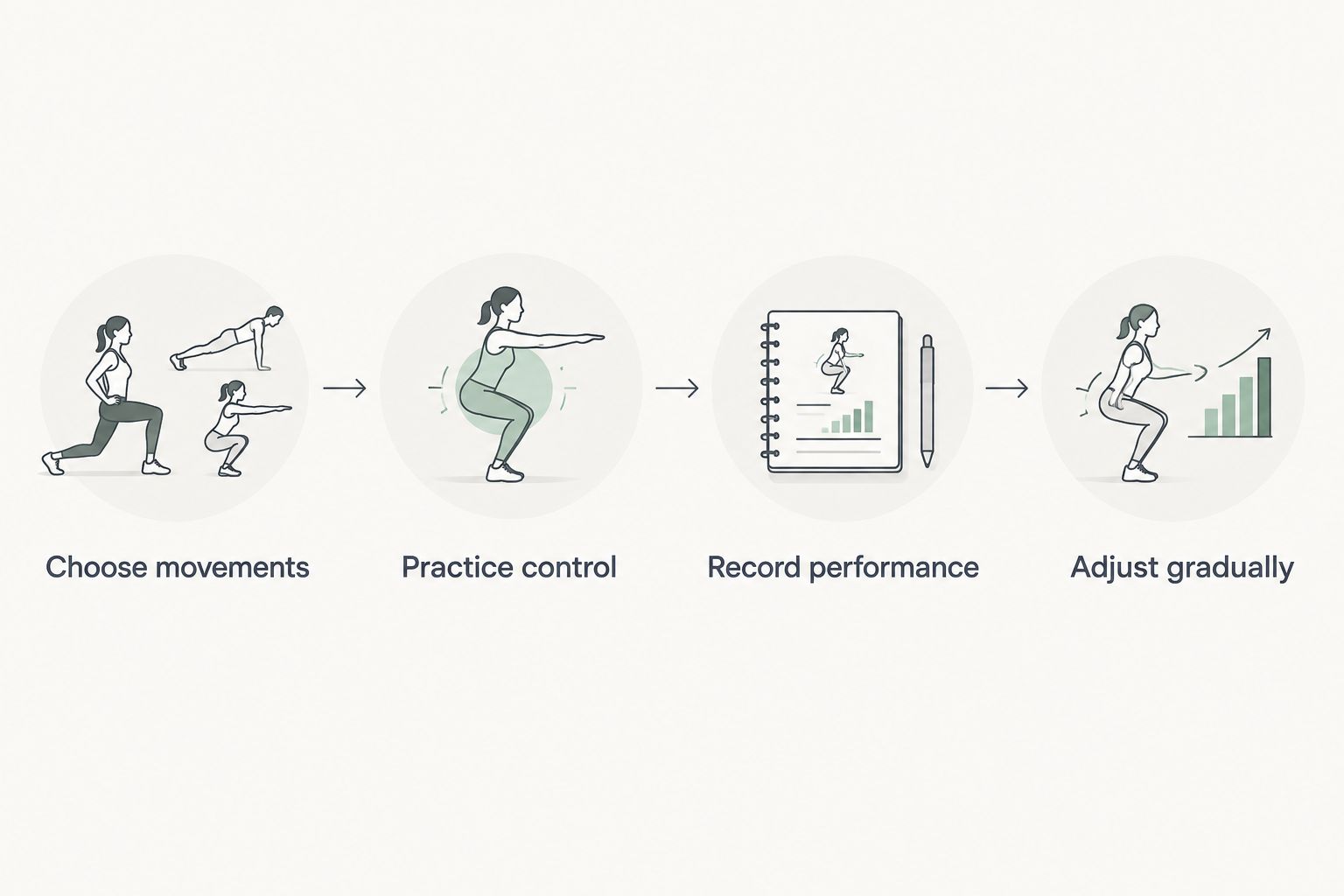
- Choose movements: Pick complementary exercises you can control.
- Practice control: Keep the same setup and comfortable range.
- Record performance: Note resistance and completed repetitions.
- Adjust gradually: Add difficulty only while technique remains repeatable.
Cerebralphysique places glute exercises within structured strength training, breathwork, and recovery coaching. Keep recovery in your plan rather than treating it as an afterthought.
FAQ
What's the best glute exercise in 2026?
The hip thrust is this guide's default choice for supported, progressively loaded hip extension. Pair it with a hinge or single-leg exercise rather than relying on it alone.
Are hip thrusts better than squats for glute growth?
Hip thrusts are more focused on hip extension, while squats train the thighs and glutes together. Neither is universally better for every person; choose based on your training goal and controllable movement.
Can I train my glutes without weights?
Yes, glute bridges and bodyweight split squats provide equipment-light starting points. Progress requires increasing difficulty as your current version becomes easier.
How often should I do glute exercises?
Two sessions per week is a practical starting schedule for this guide's beginner template. Allow recovery between sessions and adjust around your other lower-body training.
Do I need all ten glute exercises?
No, you need complementary movements you can practice and progress. Start with a supported hip-extension exercise and a hinge or single-leg movement.
Should I keep exercising if my hip or back hurts?
Stop the movement that causes pain rather than forcing another repetition. Seek assessment from a qualified healthcare professional for persistent, severe, or recurring symptoms.
One last thing
A heavier weight is not progress when it changes the exercise. In 2026, record your setup and range alongside resistance so your training log compares like with like. Cerebralphysique's strength-training and recovery approach fits that longer-term goal: practice you can sustain.